

 Engineering
 Production automation
 Testing
 Virtual accident experience
 Innovation
 Aerospace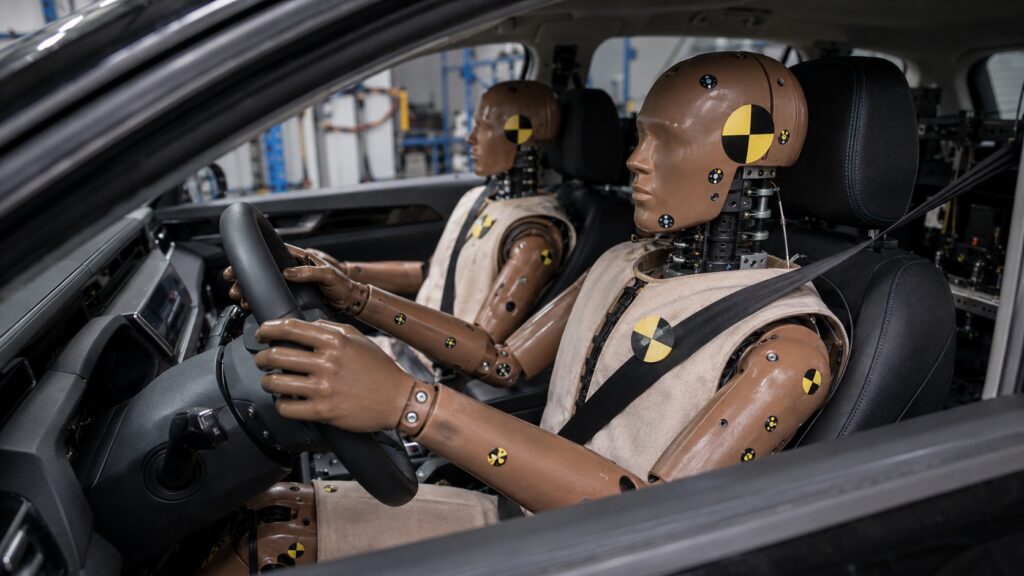
Behind every modern vehicle are thousands of hours of testing and vast amounts of data. One of the most important sources of this data is crash test dummies, which have been helping vehicle manufacturers, development centres and type-approval authorities better understand the consequences of road accidents for decades. Although virtual simulations and digital twins are becoming increasingly widespread, physical dummies remain an indispensable tool for verifying vehicle safety and calibrating computational models.
Crash Test Dummies Help Protect Human Lives
Dummies are among the key tools used in the development of passive vehicle safety. Their design combines rigid and flexible elements that replicate the behaviour of the human skeleton, muscles and soft tissues during an impact. Sensors measuring acceleration, forces, moments and deformation record key data needed to understand the impact event and the responses of individual parts of the body.
A crash test dummy is equipped with sensors located in the head, neck, chest, abdomen, pelvis, thighs, knees and lower legs, enabling detailed monitoring of the loads acting on the human body during a crash test. Based on the measured data, development teams assess the risk of injury and optimise the vehicle structure, seat belts, airbags and other protective systems.
From Simple Models to Biomechanical Systems
The first standardised crash test dummy, Hybrid I (HI), was introduced by General Motors (GM) in 1971. Its purpose was to establish a uniform standard for obtaining repeatable results in crash tests. The dummies measured biomechanical properties – although, by today’s standards, only basic parameters.
The subsequent Hybrid II (HII) generation addressed the mechanical shortcomings of its predecessor. However, a major improvement in accuracy did not arrive until the Hybrid III (HIII) generation in the late 1970s. It was equipped with a more extensive set of sensors and its design more closely replicated human anatomy, enabling more accurate assessment of the biomechanical effects of an impact.
THOR: A New Generation of Crash Test Dummies
Current developments are represented by the THOR-50M (Test Device for Human Occupant Restraint), which is one of the most advanced adult male crash test dummies. It uses more than 150 sensors distributed across the head, neck, chest, abdomen, pelvis, thighs, knees and lower legs. These measure acceleration, forces, moments, deformation and other biomechanical parameters with significantly greater accuracy than previous generations.
In Euro NCAP frontal impact tests, the THOR-50M provides more accurate prediction of chest injuries, giving manufacturers higher-quality data for the development and optimisation of safety systems.
Crash Test Models Representing Women, Children, and Older People
For many years, safety testing was based on a model of the average adult male. The modern approach, however, recognises that the risk of injury varies significantly depending on age, sex and body proportions. Increasingly stringent occupant protection criteria are therefore being introduced, accelerating the development of models that reflect anatomical differences between men, women, children and older people.
One example currently under development is the THOR-5F, representing the 5th percentile female population and corresponding to a smaller female body size. With anatomy representative of the female population, it provides more accurate data for assessing occupant protection in crash tests. Child dummies, representing children aged 18 months, 3 years, 6 years and 10 years, use sensors adapted to their lower body mass and different biomechanics. Testing primarily evaluates the effectiveness of child restraint systems and other safety systems.
Greater attention is also being paid to models simulating the biomechanical characteristics of older people. An ageing population brings new challenges in occupant protection due to factors such as increased bone fragility and reduced resilience of soft tissues. Teams are also working to simulate specific health conditions, such as osteoporosis or reduced mobility in older occupants.
Combining Physical Testing with Simulations Improves Reliability While Saving Time and Costs
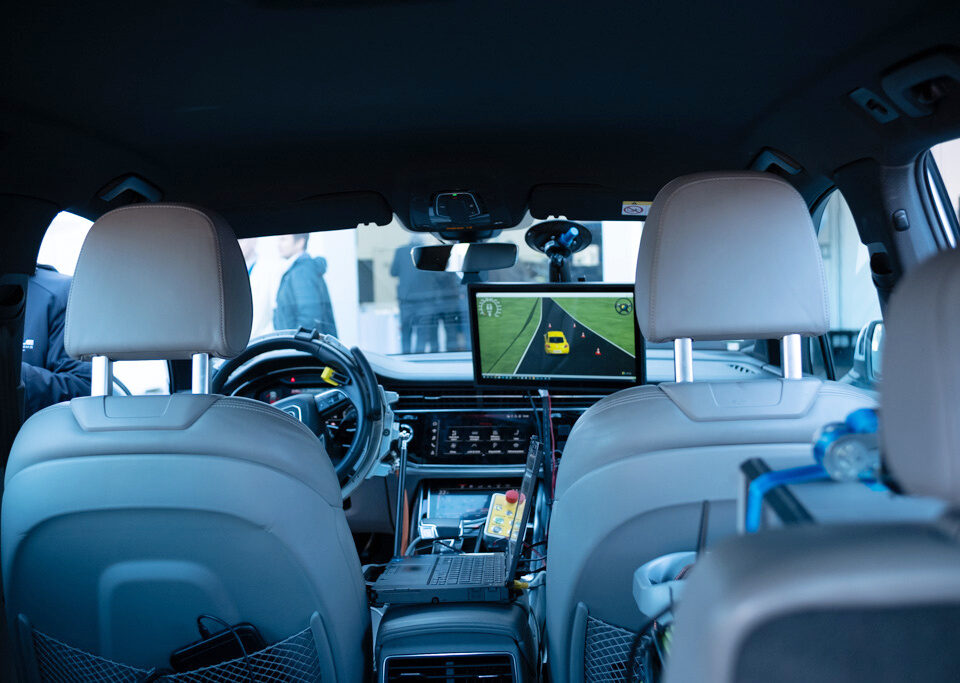
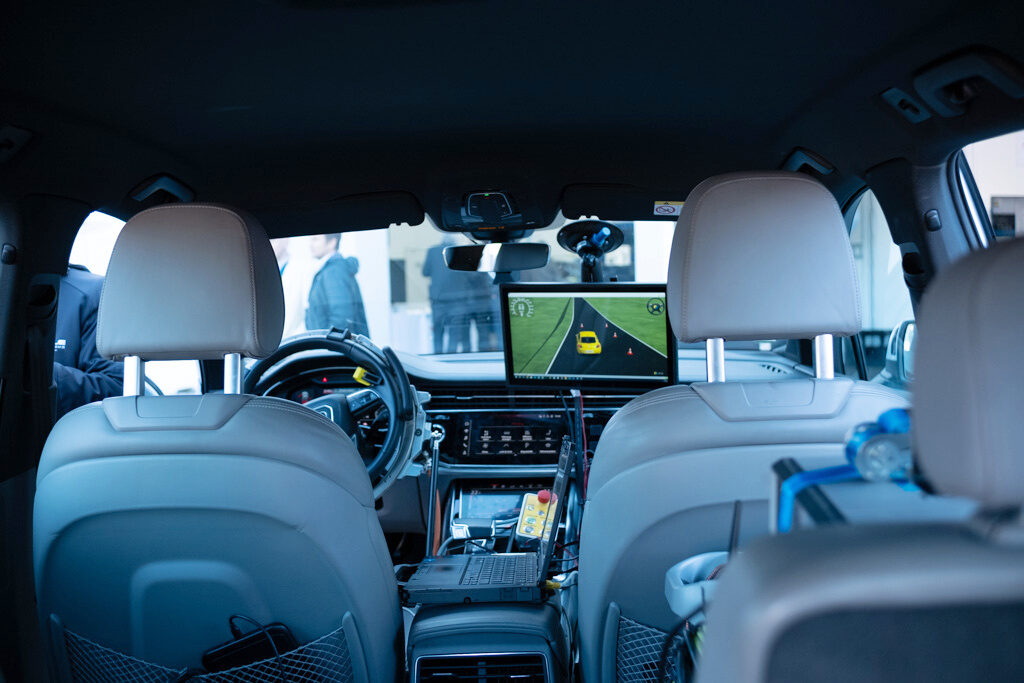
Crash tests using dummies provide key data for the calibration and validation of virtual models. The combination of physical testing and simulation now forms the foundation of modern safety system development. Approaches such as Vehicle-in-the-Loop (ViL) are also becoming increasingly important, combining a real vehicle with a digital environment – part of the scenario takes place physically and part virtually.
By combining testing with digital models, development teams can simulate extreme situations that would be dangerous or excessively costly to reproduce physically – including multiple collisions, high-speed impacts and interactions with autonomous systems. A single crash test can serve as the basis for dozens of subsequent simulations, providing OEM partners with significant savings in both time and costs.
Test data also provides key input for vehicle type approval in accordance with international UNECE regulations and is used for safety assessments within consumer testing programmes such as Euro NCAP. Sensors such as accelerometers, pressure sensors and strain gauges map the forces acting on the human body during an impact.
What Does the Future Hold for Crash Test Dummies?
The development of crash test dummies continues to advance. New generations replicate the biomechanical behaviour of the human body with ever greater accuracy and expand measurement capabilities during crash testing. Development is also focusing on better representation of different occupant groups, including women, older people and individuals with specific health-related limitations.
At the same time, the integration of physical and digital models and advanced simulation tools is becoming increasingly important. This allows development teams to verify a broader range of scenarios more efficiently and obtain higher-quality data for the design of safety systems.
New challenges are also emerging with electromobility, autonomous driving and changing vehicle interior configurations. These developments increase the need to test new occupant positions as well as collision scenarios that have not previously been addressed. Crash test dummies therefore remain one of the most important tools for developing safer means of transport, even in the age of digitalisation.
You can read more about crash test dummies, crash testing and vehicle safety testing in our interview with Pavel Funek, Head of the Analysis Team in AUREL’s Safety Department.
Modern vehicle development relies on high-quality data, advanced testing methods and rigorous validation. At AUREL, we have long been involved in development and testing and closely follow the trends shaping vehicle safety. Follow our blog, where we regularly share expert insights into current topics in the automotive industry.